




Current Issue
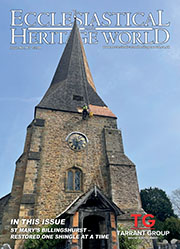


Heritage Roofing
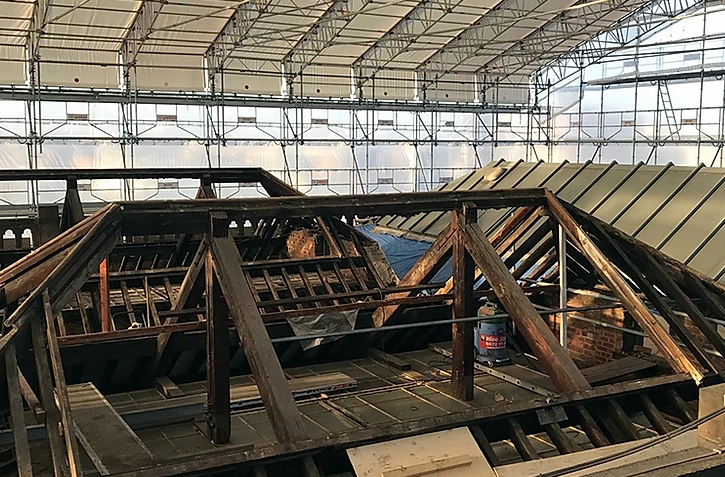
Heritage roofing - maintaining our iconic buildings
The UK is home to some of the most iconic buildings in the world, from stunning churches and cathedrals to historic stately homes. Each and every one of these remarkable feats of architecture requires regular maintenance to ensure they remain in the very best condition, allowing them to be enjoyed for generations.
Cathedral Care

Restoration and upkeep of cathedrals
There are some 42 Anglican cathedrals in the UK, not to mention 20 or so Catholic cathedrals. Cathedrals form the most important collection of historic buildings in England. The largest and most ancient are internationally famous, the smallest are usually among the most significant buildings in their region and even the most recent are architectural masterpieces.
Master Craftsmen

Championing our heritage with modern craftsmanship
Twenty years ago, English Heritage (now Historic England) published its first-ever Register of Buildings at Risk across England, which featured nearly 2,000 buildings and monuments that were ‘neglected, broken and unloved’. Recently Historic England was delighted to announce that over two-thirds of those buildings were now safe, in both urban and rural areas right across the country.
Lightning Protection

When lightning strikes are you protected against this act of God?
The issue of lightning protection in churches is one that has exercised this publication for many years. In this four-part series of spotlights on the issue we will be revisiting various aspects of the subject, beginning with an overview of current thinking.
Traditional Lime

Lime: it’s better for buildings – and for the environment
It is now fairly well known that cement is not good for old buildings and that lime mortar should be used. But why? What are the advantages and what are the disadvantages? In order to begin to answer those questions it is necessary to understand the nature of traditional building, the process by which buildings used to be built, and how it differs from modern construction, the process by which we build today.
Audio Visual

Audio visual equipment in church buildings
This guidance is issued by the Church Buildings Council under section 55(1)(d) of the Dioceses, Mission and Pastoral Measure 2007. As it is statutory guidance, it must be considered with great care. The standards of good practice set out in the guidance should not be departed from unless the departure is justified by reasons that are spelled out clearly, logically and convincingly.
Read More...







Heritage Funding
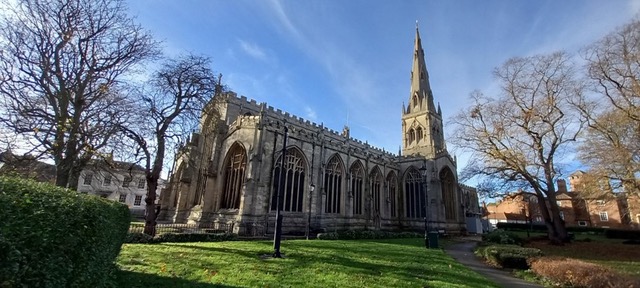
£48m heritage funding opens for churches and historic buildings
Part of £1.5 billion government investment in cultural organisations over a five-year period
Thousands of churches and historic buildings across England could benefit from a major new £48 million funding package aimed at urgent repairs, regeneration projects and wider community use.
CRE Events

Christian Resources Exhibition enters a new chapter as Church Resources Exhibition
The Christian Resources Exhibition (CRE), the UK’s largest church-related show, has changed hands in its 40th year and has been taken over by Quartz Business Media.
Insurance
You need to ensure that reasonable precautions are in place at your church to keep it safe for those who use it. To do this, you need to think about what might cause harm to people.
You will then need to decide if the precautions already in place are adequate. If they are not, you may need to identify further action to prevent any danger. When done formally, this is known as a risk assessment.
Church Maintenance
Church maintenance and repair: Calendar of Care
Just as prevention is always better than cure, maintenance is preferable to major repairs. But, such repairs may not always be avoidable. Church Care offers a monthly guide in our coming issues Starting in Spring
We can help you understand the common problems and areas that need your special attention, and give you tips for regular maintenance schemes.
Pest Control
Michael Palin warns of pest threat to churches
Michael Palin is supporting the future of the UK’s historic churches and chapels with a voiceover for a new animated film. The 80 second animation, produced for the National Churches Trust, highlights why churches are some of the nation’s best loved buildings.
Town Halls

The history of the great Victorian Town Halls of Northern England
From industrial squalor to civic pride, the story behind some of the most impressive buildings of the North involve a unique mix of economics, grand designs and noble sentiments within communities.
Lead Roofing
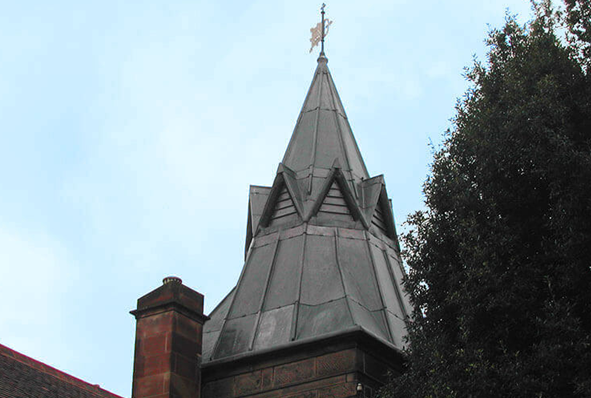
Lead is one of the oldest materials in the roofing industry and is still commonly used throughout the world today.
Lead roofing is a traditional roofing method which has been used in the industry for hundreds of years, and is therefore proven to be extremely reliable. Lead roofing, and sand-cast lead, in particular is ideal for old buildings such as churches or historical renovations, whereas milled lead roofing is a mass-produced alternative, used for precision and accuracy in homes and commercial buildings alike.


SEARCH OUR DIRECTORY
Wood Carving Classes with Gerald Adams of the Master Carvers Association
 Your Tutor. Gerald Adams
After obtaining a fine art degree at Exeter, Gerald worked for a large Norfolk Furniture maker making fine reproductions, before studying carving at the London College of Furniture and setting up on his own.
The workshop has been in production since 1986 producing components for the furniture industry, as well as lately, design, architectural detail and sculptural work for large private houses and the church.
Some happy course participants
Ruth carving an Owl
I just wanted to say thank you.
I attended a total beginners class last week and learned so much. I had no idea what to expect from the day, but learned about the different tools and their uses, sharpening techniques and so many other things. Anyone thinking of trying this hobby/craft should not hesitate. There were 4 others on the course, a doctor, carpenter, IT professional, a lady flower arranger and myself. Camaraderie was good, lunch was excellent and the instruction very professional. I will soon be booking a longer course.
Thank you Gerald
'A brilliant grounding, giving me me confidence to follow a sketch through to completion.'
'Wonderful 2 day course, thoroughly enjoyed it, am looking forward to finishing off todays work and doing further projects.
'"Went along at our own speed with Gerald always there to help out and give advice"
'It was good to be with other people who were learning and enthusiastic about carving. I feel able to begin work on the projects I have been wanting to do for years but not had the courage/skill/knowledge to start. When I was carving yesterday on my own I remembered what you had said and was really able to find ways of working with the wood rather than against it and it was thrilling to experience what you had been saying.'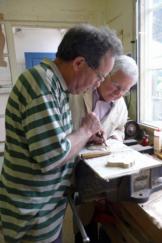
Demonstrating
Carving lettering
Wood Carving Courses
WOODCARVING FOR BEGINNERS
Thursday afternoons 2.00 - 4.30pm.
and first day of the 2 day course
New One day taster sessions
Just come for the day to learn the basic skills.
Come back again if you want to further your projects.
MAX 5 STUDENTS.
Gerald gained a Cert Ed, teaching qualification in 1998 and has taught at Adult education and technical college level for many years. He has run his own carving business since 1986, all courses will be taught in the workshop and students will get the feeling of working in a professional atmosphere.
AIMS OF COURSE:
The course is designed to introduce students to the specific skills and techniques involved in woodcarving, to boost their confidence and enthusiasm to take on new projects.
WHAT STUDENTS SHOULD ACHIEVE
Students should gain a good understanding of the fundamentals of woodcarving techniques and practices, the tutor aims to encourage and direct individuals to use their talents effectively. You can expect to complete a piece of work in the time available.
TECHNIQUES AND MATERIALS COVERED
• Health and Safety
• Basic design work
• learn how to sharpen and use a range of tools
• Ways of Holding and securing work
• Roughing out and initial wood removal
• Developing and detailing the work with various tools and gouges
• Surface treatment and finishing.
TEACHING METHOD
The course is hands on: tuition is by demonstration; learning is by practice with tutor input.
STUDENT PREPARATION
Students should wear clothing and footwear suitable for hands on workshop work.
Bring any hand tools you already have but please do not buy new or extra as there are tools available and advice will be given on what is required. Wood is available at cost.
Woodcarving courses - projects
WOODCARVING COURSES 2 Day / WEEKEND
The joy of woodcarving is the range of subjects that can tackled and with my wide ranging background and experience of work, from life and animal sculpture to church work and furniture and all the bits in between anything can be achieved!
As well as the subjects covered in the beginner’s class the following, more specific areas can be taught.
These are suggestions as weekends can be tailored to suit individual carvers, we aim to have fun as well as be instructional and inspirational.
STUDENT PROJECTS
Bring your own new or ongoing projects for advice and further encouragement.
If you could send photo’s or drawings before the course, we can have a head start.
LETTERING
Again the course looks at design, transferring design to wood, cutting and finishing
Students should by the end of a weekend have a house sign or plaque to take home.
CARVE A CABRIOLE LEG
This covers the subject from design to finished product, various aspects are looked at:-
• Design and patterns
• Cutting out
• Shaping with spokeshaves
• Carving, depending on duration of course, shell knee, scroll knee, acanthus leaves, pad foot, ball and claw foot.
A maximum of 5 students are accepted, so tutor/student contact time is high. On the week courses and sometimes on the weekends I might work on my own work as well, which I think is helpful, (a) so that I am not looking over your shoulder the whole time! And (b) Students can see and learn from different aspects of the craft depending on what I am working on at the time.
Why not give a course as a present? Birthday, Anniversary or Christmas, Vouchers available!
Please give me a ring on 01508 532111 to discuss fees and dates.
More information on the website http://www.adamswoodcarving.co.uk/
Linenfold Panel
April 2011 group
VISIT OUR ASSOCIATED SITES