




Current Issue
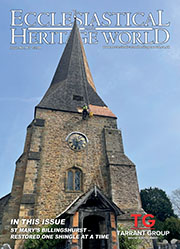


Heritage Roofing
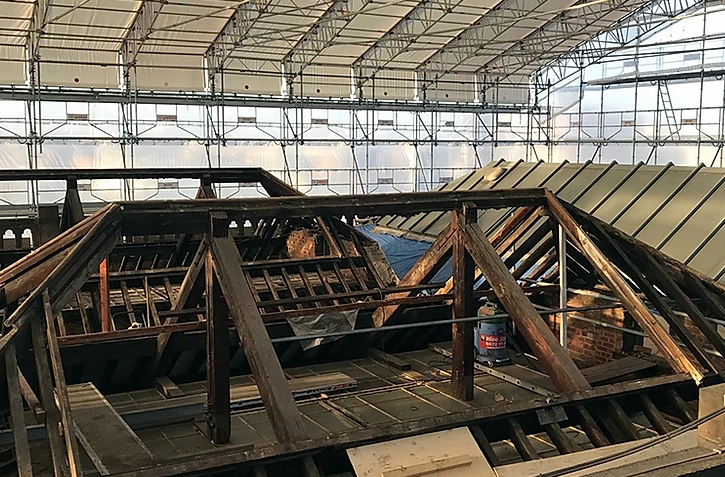
Heritage roofing - maintaining our iconic buildings
The UK is home to some of the most iconic buildings in the world, from stunning churches and cathedrals to historic stately homes. Each and every one of these remarkable feats of architecture requires regular maintenance to ensure they remain in the very best condition, allowing them to be enjoyed for generations.
Cathedral Care
Restoration and upkeep of cathedrals
There are some 42 Anglican cathedrals in the UK, not to mention 20 or so Catholic cathedrals. Cathedrals form the most important collection of historic buildings in England. The largest and most ancient are internationally famous, the smallest are usually among the most significant buildings in their region and even the most recent are architectural masterpieces.
Master Craftsmen

Championing our heritage with modern craftsmanship
Twenty years ago, English Heritage (now Historic England) published its first-ever Register of Buildings at Risk across England, which featured nearly 2,000 buildings and monuments that were ‘neglected, broken and unloved’. Recently Historic England was delighted to announce that over two-thirds of those buildings were now safe, in both urban and rural areas right across the country.
Lightning Protection

When lightning strikes are you protected against this act of God?
The issue of lightning protection in churches is one that has exercised this publication for many years. In this four-part series of spotlights on the issue we will be revisiting various aspects of the subject, beginning with an overview of current thinking.
Traditional Lime
Lime: it’s better for buildings – and for the environment
It is now fairly well known that cement is not good for old buildings and that lime mortar should be used. But why? What are the advantages and what are the disadvantages? In order to begin to answer those questions it is necessary to understand the nature of traditional building, the process by which buildings used to be built, and how it differs from modern construction, the process by which we build today.
Audio Visual
Audio visual equipment in church buildings
This guidance is issued by the Church Buildings Council under section 55(1)(d) of the Dioceses, Mission and Pastoral Measure 2007. As it is statutory guidance, it must be considered with great care. The standards of good practice set out in the guidance should not be departed from unless the departure is justified by reasons that are spelled out clearly, logically and convincingly.
Read More...







Heritage Funding
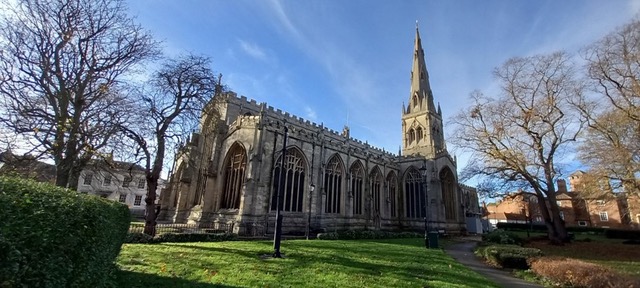
£48m heritage funding opens for churches and historic buildings
Part of £1.5 billion government investment in cultural organisations over a five-year period
Thousands of churches and historic buildings across England could benefit from a major new £48 million funding package aimed at urgent repairs, regeneration projects and wider community use.
CRE Events

Christian Resources Exhibition enters a new chapter as Church Resources Exhibition
The Christian Resources Exhibition (CRE), the UK’s largest church-related show, has changed hands in its 40th year and has been taken over by Quartz Business Media.
Insurance
You need to ensure that reasonable precautions are in place at your church to keep it safe for those who use it. To do this, you need to think about what might cause harm to people.
You will then need to decide if the precautions already in place are adequate. If they are not, you may need to identify further action to prevent any danger. When done formally, this is known as a risk assessment.
Church Maintenance
Church maintenance and repair: Calendar of Care
Just as prevention is always better than cure, maintenance is preferable to major repairs. But, such repairs may not always be avoidable. Church Care offers a monthly guide in our coming issues Starting in Spring
We can help you understand the common problems and areas that need your special attention, and give you tips for regular maintenance schemes.
Pest Control
Michael Palin warns of pest threat to churches
Michael Palin is supporting the future of the UK’s historic churches and chapels with a voiceover for a new animated film. The 80 second animation, produced for the National Churches Trust, highlights why churches are some of the nation’s best loved buildings.
Town Halls
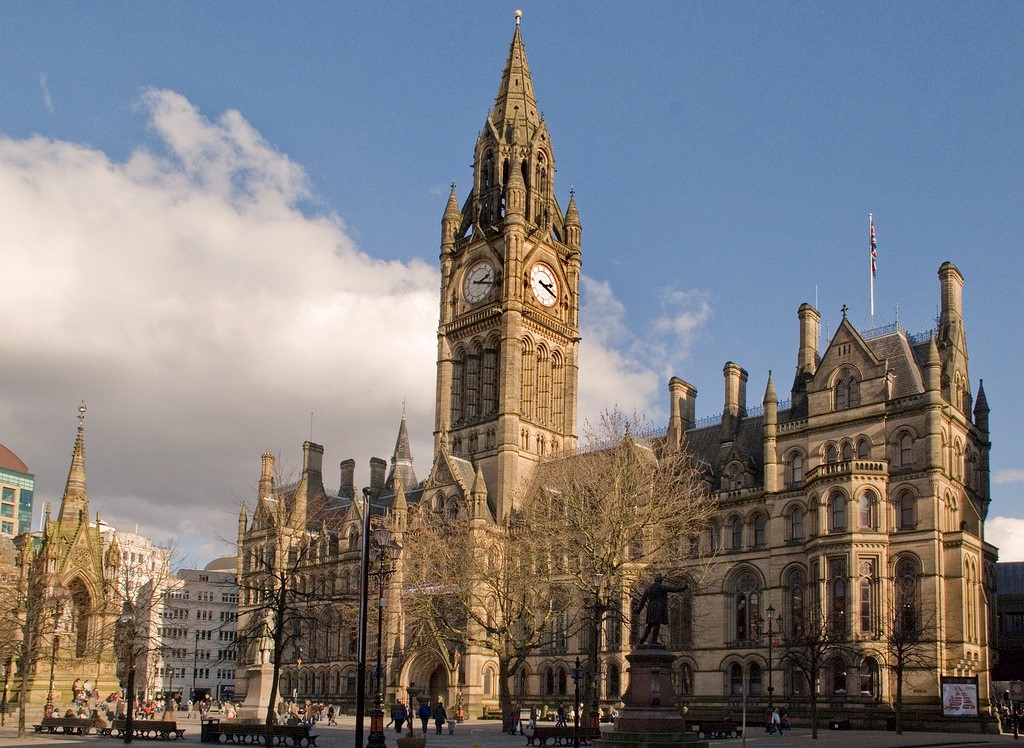
The history of the great Victorian Town Halls of Northern England
From industrial squalor to civic pride, the story behind some of the most impressive buildings of the North involve a unique mix of economics, grand designs and noble sentiments within communities.
Lead Roofing
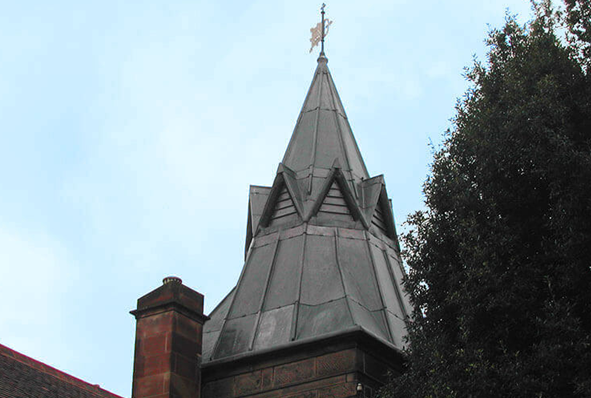
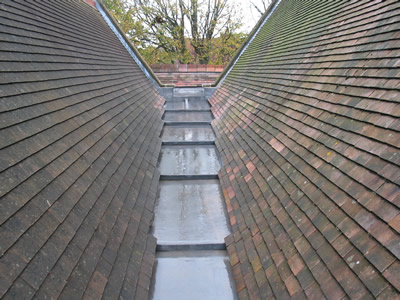
Lead is one of the oldest materials in the roofing industry and is still commonly used throughout the world today.
Lead roofing is a traditional roofing method which has been used in the industry for hundreds of years, and is therefore proven to be extremely reliable. Lead roofing, and sand-cast lead, in particular is ideal for old buildings such as churches or historical renovations, whereas milled lead roofing is a mass-produced alternative, used for precision and accuracy in homes and commercial buildings alike.
SEARCH OUR DIRECTORY
Taking the Lead in Traditional Metal Roof Training
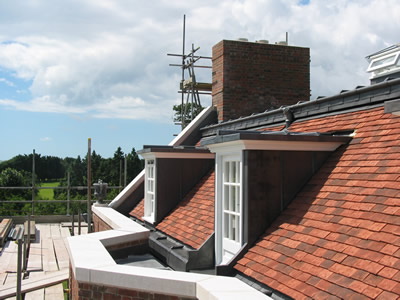 The latest development in metal roof training may come as a surprise to some, but it is perhaps one of the more logical progressions in an industry that is trying to persuade contractors that training is the way forward.
When the Lead Sheet Association built its own training centre in East Peckham, an area of Kent more synonymous with hop fields, it was unlikely they were considering its use beyond the traditional lead roofing sector.
However at a time when the FTMRC were looking for a new training facility after the arrangement with the Building Crafts College came to an end, a trial course at East Peckham delivered by VM Zinc in November was quickly followed by a second course in December.
Although the theory introduction to the course needs no special facility, the relatively simple conversion of some of the existing lead roof models to accept zinc details enabled the trainees to move on from theory to tackle realistic practical weathering features.
VM Zinc, having provided the trainers, materials, tools and equipment for the course, were delighted with both the facilities provided and the response from the trainees, which was unilaterally that they wanted the courses to go on longer.
 Such has been the success of the initial courses, VM Zinc have committed to providing a series of courses which will cover basic and intermediate level training bi-monthly from January to November 2010. There will also be CPD certified one day events for architects, surveyors and specifiers to provide a theory / design insight for zinc specification, as well as hands-on workshop opportunities.
Given the success of the zinc training, the FTMRC have encouraged other manufacturers to consider using the LSA facilities and now copper courses have also been organised for September and October 2010, delivered through Associate members KME and Luvata, as the next stage in this development.
Training Centre Manager Nigel Johnston was delighted at the success of the zinc courses.
“Even at a time when the construction industry is under so much pressure, it is vital that contractors continue to train their workforce and we are delighted that the facility at East Peckham is now being looked at by other trades in metal roofing through the FTMRC.”
“It does also provide the opportunity for contractors to have an insight into another skill base potential and we have already had zinc contractors expressing an interest in lead courses and vice versa.”
Further details on available training courses for contractors and CPD certified awareness courses for architects and surveyors are available from the FTMRC
Do you want cheap or do you want value for your money?
If you use a contractor because you like their price, then you get what you pay for and quite frankly deserve exactly what you get.
A lead roof properly fitted performs for more than 100 years, but if you think getting one that lasts for five years is good value because it was done on the cheap, then there is nothing much we can say to you.
If a contractor gives you a price for your lead, copper, aluminium, zinc or steel installation that is so much cheaper than other quotes, it seems just too good to be true – THEN IT PROBABLY IS!!!
(What corners have been cut to win the job? What “unforeseen extras” will be loaded on after the contract is awarded to make the job pay?)
In simple terms USE A SPECIALIST – they know what they’re talking about.
Members of the Lead Contractors Association and Federation of Traditional Metal Roofing Contractors are not allowed to cut corners. Their work is vetted on site by experts and full technical reports submitted and held on file. If faults or incorrect practices are identified they must be immediately corrected or their membership is forfeit.
Do experts check your installers work? For free???
Using a current member of the LCA or FTMRC means long term peace of mind for the architect and client as it takes full advantage of the knowledge and experience provided by specialists, who know how to install metal to perform at its very best.
Contractors in each organisation have the full support of ALL the manufacturers of the respective roofing metals, who know their product is in safe hands in delivering the very best long term performance results.
To contact your nearest leadwork specialist contact the Lead Contractors Association (01342 31788) or go to www.lca.gb.com
To contact your nearest specialist in other traditional roofing metals contact the Federation of Traditional Metal Roofing Contractors (01342 301627) or go to www.ftmrc.co.uk
VISIT OUR ASSOCIATED SITES